
Sap sugar concentration — measured in degrees Brix (°Bx) — is the most consequential variable in calculating how much sap will be required to produce a given quantity of syrup. Sugar maple sap typically runs between 1.5% and 4% sugar content by weight, though concentrations outside this range do occur. A single percentage point of difference in incoming sap translates directly into a roughly 20% change in the volume of sap needed to reach finished syrup.
Small-scale producers who do not measure incoming sap concentration work with a fixed assumption — most commonly a 2% or 2.5% estimate — that may or may not reflect the actual composition of their sap on a given day. Routine measurement adds a few minutes to the daily workflow but removes significant uncertainty from fuel and equipment planning.
Understanding Brix
The Brix scale expresses the percentage of sucrose dissolved in a solution, measured by weight. A reading of 2.0°Bx means the solution contains approximately 2 grams of dissolved sugar per 100 grams of solution. In maple sap, the dissolved solids are predominantly sucrose, with small amounts of other sugars, amino acids, and minerals.
Finished maple syrup in Canada must reach a minimum density of 66°Bx under federal grading regulations administered by the Canadian Food Inspection Agency (CFIA). Syrup bottled below this threshold is considered non-conforming under the Maple Products Regulations.
Using a Refractometer
A handheld refractometer measures the refractive index of a liquid sample, which is then converted to a Brix reading. Sap-range refractometers calibrated from 0 to 10°Bx or 0 to 32°Bx are suitable for testing incoming sap. Syrup-range refractometers calibrated from 58 to 90°Bx are used to check finished product.
Procedure for Field Testing Sap
- Calibrate the refractometer with distilled water at the ambient temperature before taking measurements
- Open the daylight plate and apply 2–3 drops of sap to the prism
- Close the plate and hold the eyepiece toward a light source
- Read the Brix value at the boundary line between the light and dark fields
- Wipe the prism clean with a damp cloth between samples
Temperature compensation is important. Many analog refractometers include automatic temperature compensation (ATC); if yours does not, apply the manufacturer's correction table. Sap temperature in the field often differs significantly from the refractometer's calibration temperature.
The Sap-to-Syrup Ratio
The sap-to-syrup reduction ratio can be approximated using the Rule of 86 (for US gallons) or its metric equivalent. The principle: divide a constant by the sap sugar percentage to determine how many units of sap are needed per unit of finished syrup.
Rule of 86 — Sap Volume Required per Unit of Syrup (US gallons)
| Sap Sugar Content (°Bx) | Gallons of Sap per Gallon of Syrup | Litres of Sap per Litre of Syrup |
|---|---|---|
| 1.0% | 86 | ~86 |
| 1.5% | 57 | ~57 |
| 2.0% | 43 | ~43 |
| 2.5% | 34 | ~34 |
| 3.0% | 29 | ~29 |
| 3.5% | 25 | ~25 |
| 4.0% | 22 | ~22 |
The constant 86 is derived from the approximate Brix of finished maple syrup (66°Bx) divided by 0.77. The metric equivalent is sometimes cited as 85.3 to account for density differences between Fahrenheit-based and Celsius-based measurements.
Factors Affecting Sap Sugar Content
Tree Genetics
Sugar content in individual sugar maple trees varies significantly by individual genetics. Research published through the Agriculture and Agri-Food Canada maple research program has documented substantial within-stand variation, with some trees consistently producing sap at twice the concentration of their immediate neighbours. This genetic variability is one basis for clonal rootstock programs aimed at selecting high-Brix individuals for propagation.
Site Conditions
Trees on well-drained slopes with adequate soil depth and access to sunlight tend to produce higher-concentration sap than those in wet hollows or under heavy canopy shade. The relationship between soil nutrient availability and sap sugar content is an area of active research; phosphorus and potassium availability have been cited in some studies as correlating with sap quality, but the relationship is not linear and varies by site.
Season Timing
Sap collected in the first runs of the season often reads higher Brix than sap collected in the final days before bud break. As the season progresses and temperatures remain above freezing for longer periods, sap sugar content tends to decline and the risk of off-flavour development increases. Monitoring Brix throughout the season allows producers to make informed decisions about when to stop collecting.
Canadian Grading Standards and Brix
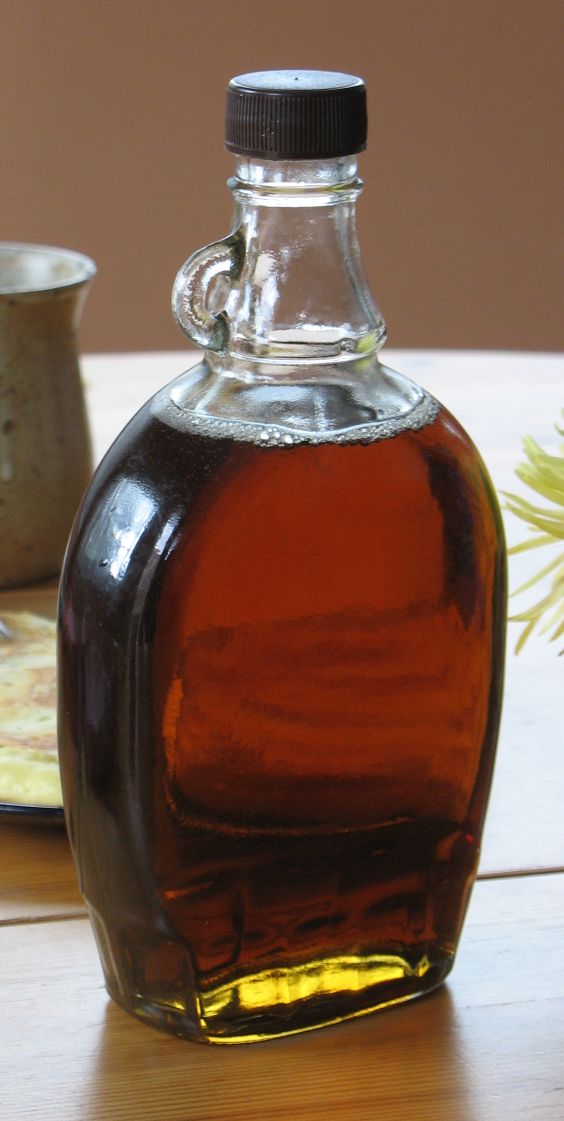
Under Canada's Maple Products Regulations, maple syrup sold commercially must meet a minimum density of 66°Bx and a maximum of approximately 68.9°Bx. Syrup above the upper threshold can crystallize in the container; syrup below the lower threshold is considered dilute and may ferment.
The four Canadian grades — Grade A Golden Colour Delicate Taste, Grade A Amber Colour Rich Taste, Grade A Dark Colour Robust Taste, and Grade A Very Dark Colour Strong Taste — are determined by light transmittance measured with a spectrophotometer at 560 nm, not by Brix alone. Both criteria must be met for graded product.
References and Further Reading
- Canadian Food Inspection Agency — Maple Products Regulations
- Agriculture and Agri-Food Canada — Maple research publications
- Ontario Ministry of Agriculture, Food and Rural Affairs — Maple Syrup Production